
Translating patents for the Indonesian market is no easy task. The patent translation challenges in Indonesia go far beyond converting words from English into Indonesian. Patent translation requires an in-depth understanding of both language and law, combined with technical accuracy that leaves no room for ambiguity. For global companies seeking patent protection in Indonesia, these challenges highlight why professional expertise is essential.
1. Legal and Regulatory Complexity
Indonesia’s patent system follows specific regulations under the Patent Law No. 65/2024, which require all foreign patent applications to be filed in Indonesian. However, this process isn’t just about language, it’s about legal precision. Even a single mistranslated term can affect the scope of protection. This is one of the biggest patent translation challenges in Indonesia, as translators must ensure consistency with legal terminology used by the Indonesian Directorate General of Intellectual Property (DGIP).
2. Technical Terminology and Industry-Specific Language
Many patents come from highly specialized fields such as biotechnology, chemical engineering, and information technology. Translators must not only understand these subjects but also know how to express them using the correct Indonesian equivalents. Technical words like “polymerization catalyst” or “semiconductor substrate” can have multiple interpretations if not handled properly. That’s why expert translators often work closely with patent attorneys or subject-matter specialists to avoid errors and ensure the final translation accurately represents the original invention.
3. Maintaining Consistency in Terminology
Consistency is another major concern in patent translation challenges in Indonesia. Patent documents often contain repeated terms and references that must remain uniform throughout claims, descriptions, and abstracts. Using different translations for the same concept can lead to confusion or even invalidate part of the patent. Tools like SDL Trados Studio or memoQ can help maintain term consistency, but human review is still crucial for final quality assurance.
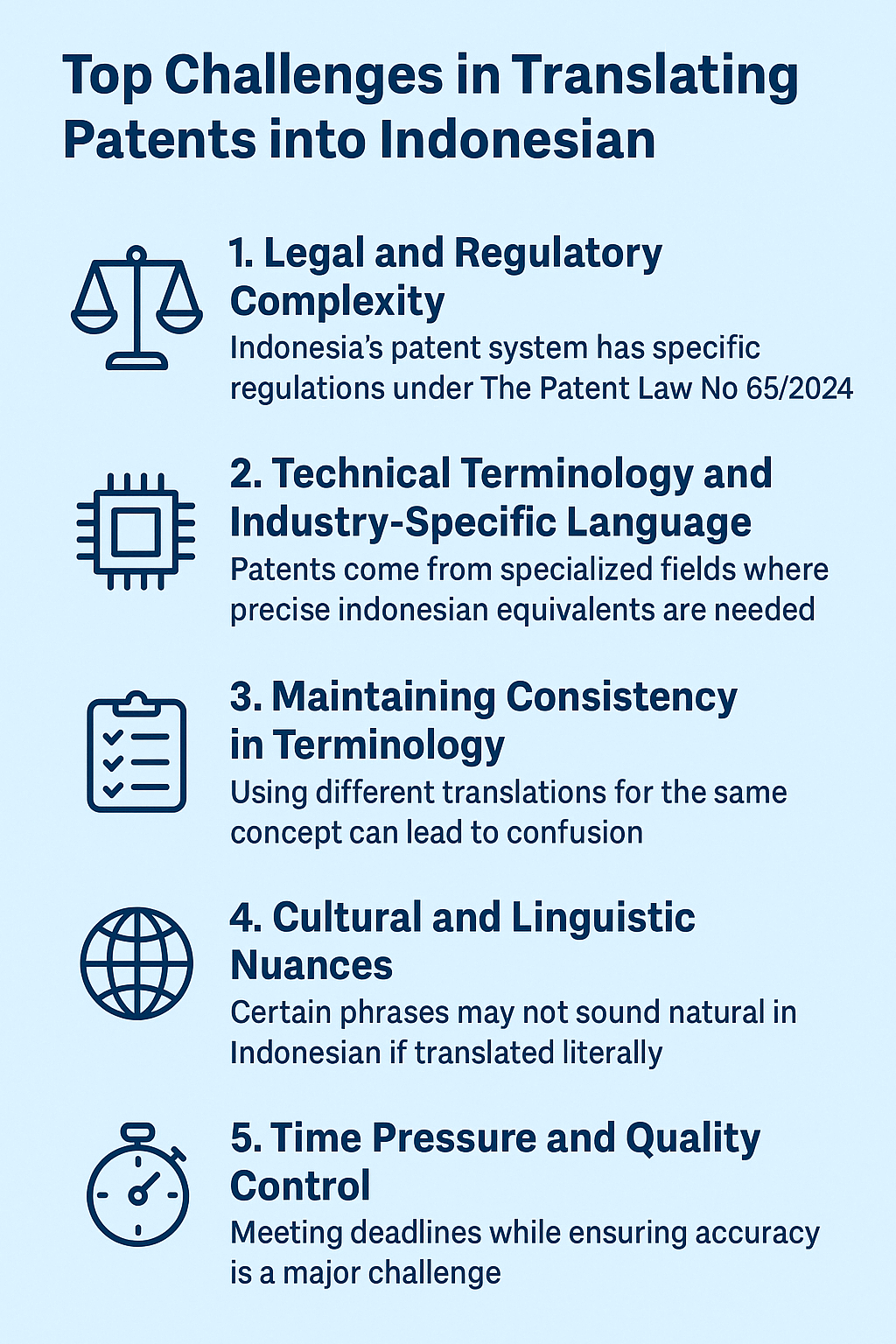
4. Cultural and Linguistic Nuances
While patents are technical in nature, language nuance still matters. Certain phrases that are clear in English might sound vague or unnatural in Indonesian if translated literally. Translators must strike a balance between linguistic fluency and legal accuracy. Moreover, some English terms, especially in fast-evolving industries, have no established Indonesian equivalent, requiring careful adaptation without altering meaning.
5. Time Pressure and Quality Control
Patent translations often come with strict deadlines aligned with international filing schedules under systems like the PCT (Patent Cooperation Treaty). Managing quality while meeting these deadlines is another of the key patent translation challenges in Indonesia. Professional patent translator like amrutranslate.com employ multi-step review processes to ensure accuracy, compliance, and timely delivery.
Conclusion
Understanding these patent translation challenges in Indonesia is vital for companies planning to file patents locally. Precision, consistency, and legal expertise are key to successful translation. Partnering with a specialized service like amrutranslate helps you navigate Indonesia’s complex patent environment with confidence, ensuring your intellectual property is protected without compromise.
LinkedIn http://www.linkedin.com/in/yulfan-patent-translator
Contact us https://amrutranslate.com/our-services/